A Practical Mobility Routine for Desk Workers in Mauritius
Long hours at a laptop can leave the hips, upper back, and shoulders feeling stiff, especially when workdays include commuting and little movement between meetings. The solution is not to hold a perfect posture all day or aggressively stretch every tight area.
A better approach alternates positions, adds brief movement breaks, and strengthens the ranges you want to use. This routine is general fitness guidance; persistent pain, numbness, weakness, or symptoms after injury need assessment by a qualified healthcare professional.
Key takeaways
- Change position regularly instead of searching for one perfect sitting posture.
- Use two- to five-minute movement breaks during the workday.
- Combine mobility drills with strength for more durable improvement.
- Pain and neurological symptoms require appropriate clinical assessment.
Start with movement frequency
Set a cue to stand, walk, or change position every 45 to 90 minutes. The exact interval matters less than interrupting long, unbroken periods of sitting. A phone call taken while walking can be as useful as a formal stretch break.
Use the office environment: a few sit-to-stands from a chair, gentle wall slides, slow torso rotations, and a short walk. None should be forced into pain. The purpose is to restore movement, not to turn every break into a workout.
Use a simple six-minute mobility sequence
Try controlled cat-cow movements, half-kneeling hip-flexor rocks, an open-book upper-back rotation, and wall slides. Perform five to eight calm repetitions of each and breathe normally. Move through a comfortable range rather than chasing a dramatic stretch.
If kneeling is uncomfortable or your workspace is limited, choose standing hip extensions, supported rotations, and shoulder circles. A routine you can perform beside the desk is more likely to happen than a perfect sequence requiring a full gym.
Strengthen the positions you want to keep
Rows, split squats, Romanian deadlifts, carries, and controlled pressing build the upper back, hips, and trunk. Two full-body strength sessions each week usually do more for long-term capacity than stretching alone.
Progress gradually and keep technique clear. A private coach can adjust exercise selection when equipment, mobility, or confidence limits the standard version.
Make the workstation easier to vary
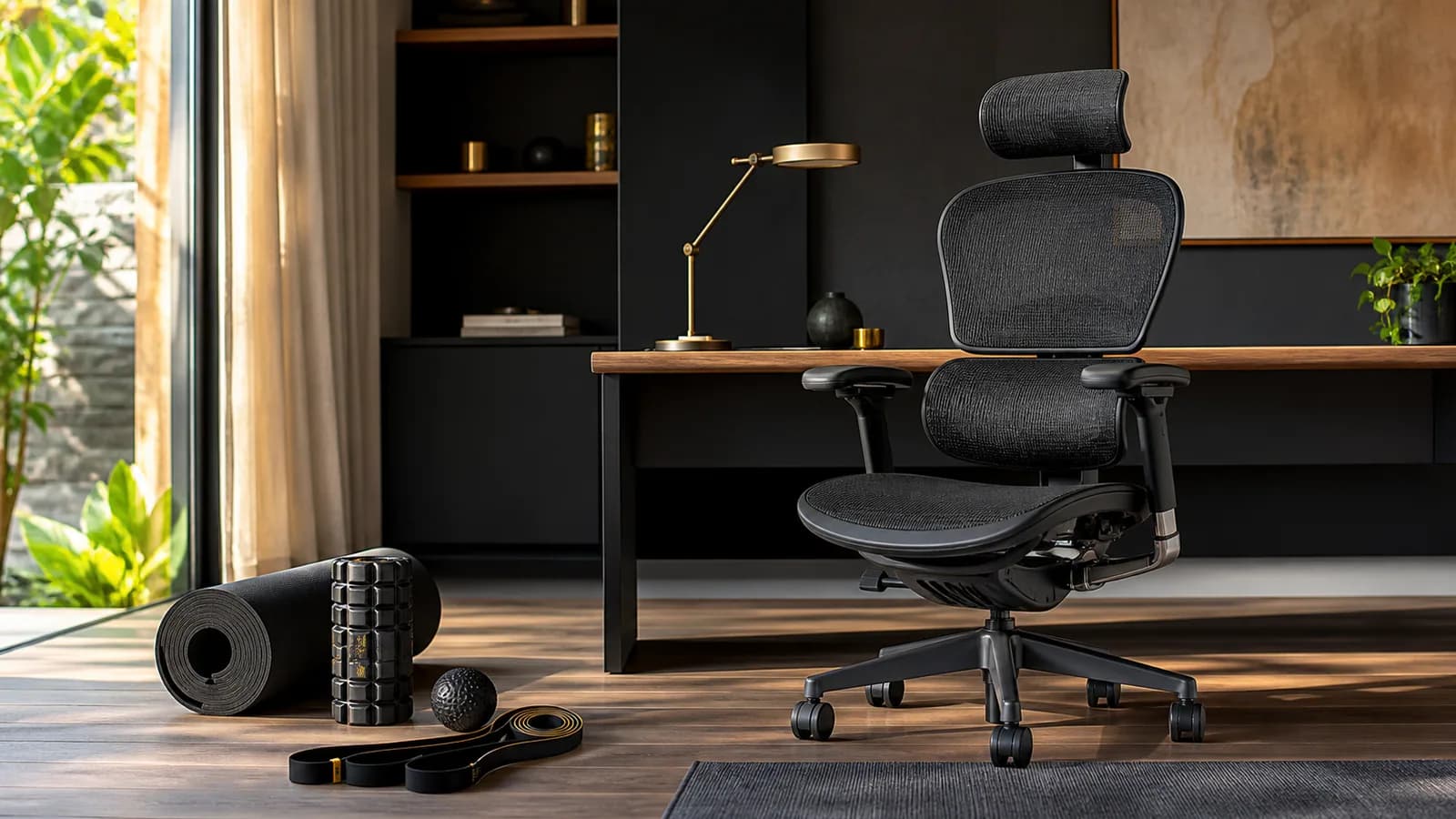
Place the screen where you can view it without repeatedly craning forward, keep commonly used items within easy reach, and use a chair height that lets your feet feel supported. These are comfort adjustments, not a promise that one position prevents all discomfort.
The most useful workstation is one that allows variation. Alternate sitting, standing, and short walks where practical, then use training to build the physical capacity your workday does not provide.
Helpful next links
Continue into the most relevant service, landing page, or booking option from this topic.